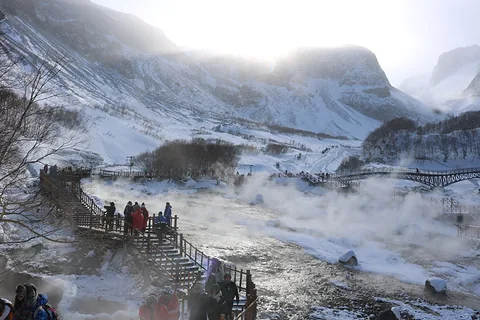

Changbai Mountain

Changbai Mountain

長白山

Overview

Sacred mountain with a stunning crater lake surrounded by snow-capped peaks, alpine meadows, and natural hot springs.

Best Season

Summer & Fall

Region

Northeast China

Quick Facts

Best Season

Summer & Fall

Region

Northeast China

Must-Visit Attractions

Heaven Lake
1

Heaven Lake

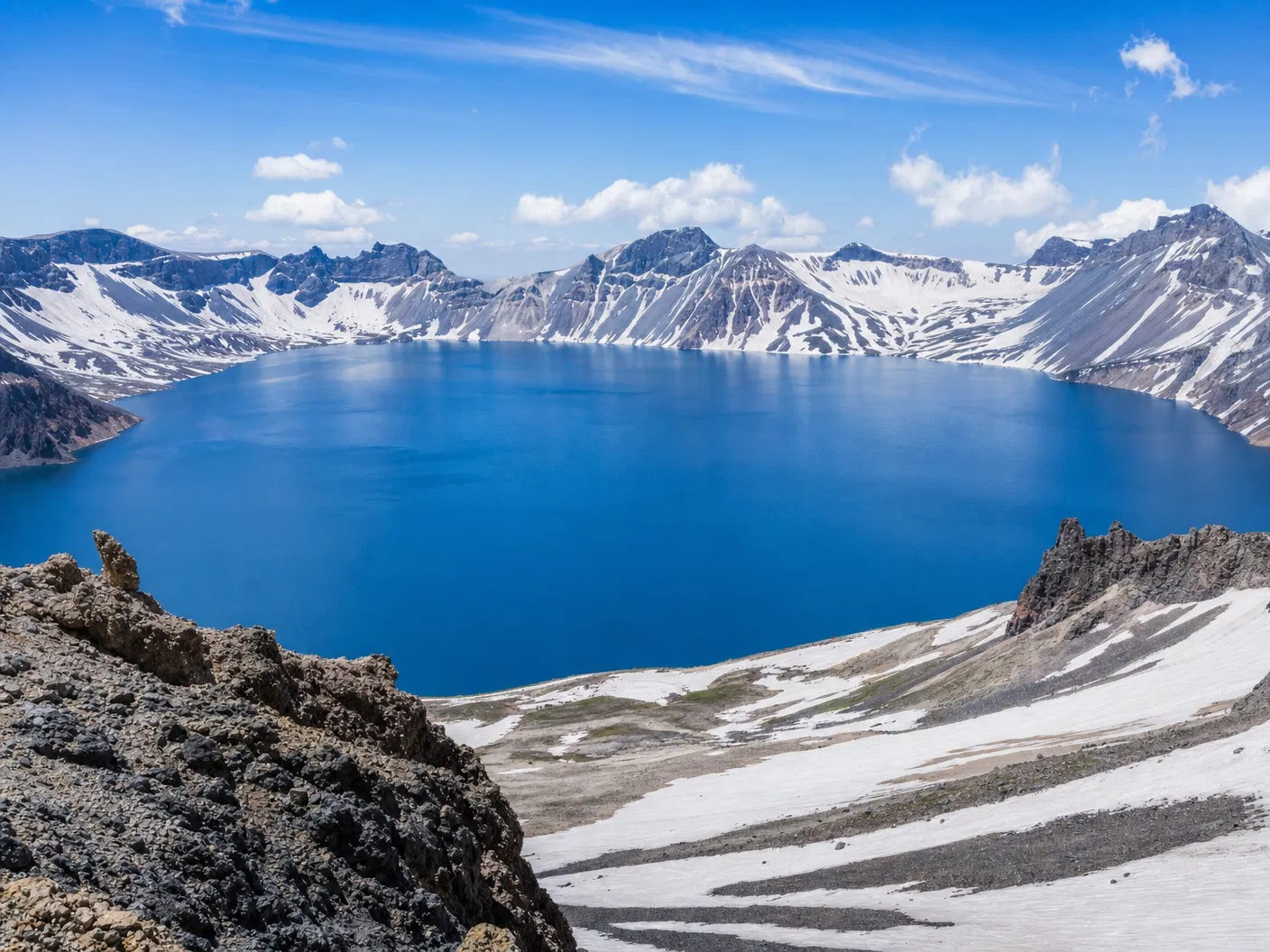
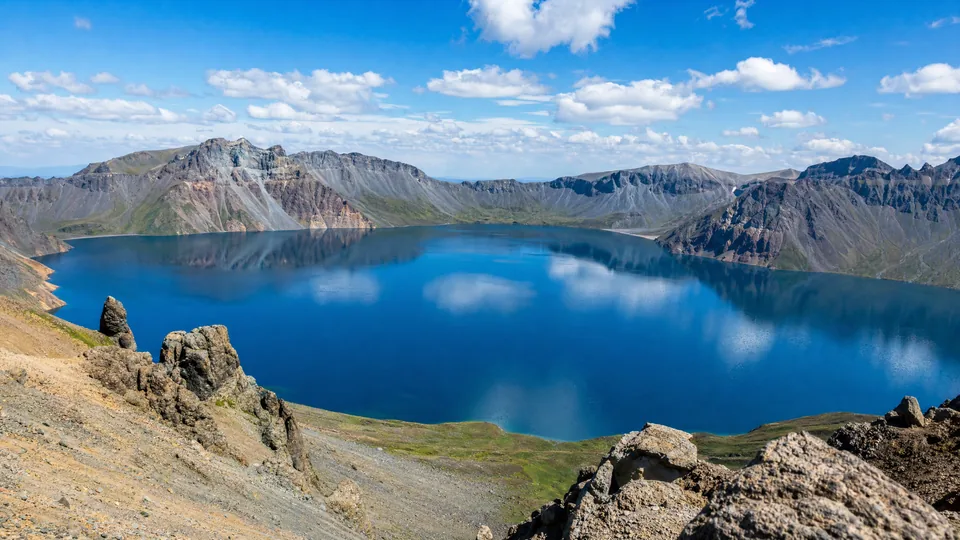
Nestled within the caldera of Changbai Mountain, Heaven Lake (Tianchi) is a pristine volcanic crater lake, renowned as the deepest lake in China and the highest volcanic lake globally. Formed by a massive eruption in 946 AD, it holds profound cultural significance for both Chinese and Korean peoples, with Qing emperors historically making pilgrimages here. Its crystal-clear, often icy waters, framed by rugged peaks, offer a breathtaking spectacle, especially appealing to international groups seeking unique geological wonders and serene, majestic landscapes.

Highlights:

  • Volcanic Crater Lake
  • Highest Alpine Lake
  • Profound Cultural Significance
  • Pristine Mountain Scenery
Changbai Waterfall
2

Changbai Waterfall

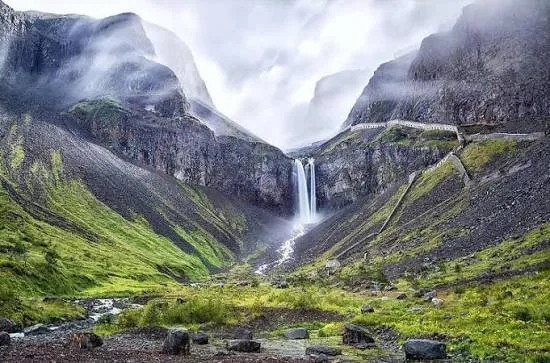
Cascading dramatically from Heaven Lake, the 68-meter-tall Changbai Waterfall is a powerful testament to the region's volcanic geology. As the tallest volcanic waterfall in the world, its waters plunge over unique black volcanic rock formations, creating a mesmerizing spectacle that changes with the seasons—from a thundering torrent in summer to a frozen marvel in winter. International visitors are drawn to its raw natural power and the geological narrative it tells, often complemented by nearby hot springs.

Highlights:

  • Volcanic Alpine Waterfall
  • 68-Meter Plunge
  • Geological Marvel
  • Seasonal Transformations
Mojie (Magic Realm)
3

Mojie (Magic Realm)

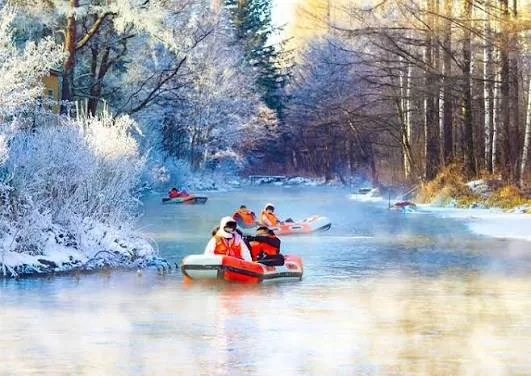
Mojie (魔界), literally 'Magic Realm,' is one of Changbai Mountain's most otherworldly and photogenic landscapes — a primeval forest of ancient Korean pine and spruce trees whose branches are perpetually encrusted in thick rime ice and snow, creating a surreal frozen wonderland that seems to belong to another dimension. Located at around 1,700 metres elevation on the northern slope of Changbai Mountain, Mojie is accessible in winter via snowmobile and snowshoe, and the eerie silence of the ice-covered forest, broken only by the creak of frozen branches, offers an experience unlike anything else in China. The landscape is most dramatic from December to February, when temperatures plunge to -30°C and every surface is coated in crystalline frost sculptures.

Highlights:

  • Primeval rime-ice forest
  • Otherworldly winter photography
  • Snowmobile & snowshoe access
  • Temperatures to -30°C
Julong Hot Spring
4

Julong Hot Spring

Experience the rejuvenating power of Julong Hot Spring, a volcanic self-flowing spring nestled in the pristine Changbai Mountain. Boasting over 30 distinct indoor and outdoor pools, including herbal and hydrotherapy options, it offers a diverse and luxurious wellness retreat. Surrounded by ancient forests, guests can immerse themselves in a natural oxygen bar, enjoying tranquility and the harmonious beauty of nature.

Highlights:

  • Volcanic Spring
  • 30+ Pools
  • Wellness Retreat
  • Forest Immersion
Xueronghua Ice & Snow Park
5

Xueronghua Ice & Snow Park

Xueronghua Ice & Snow Park (雪絨花冰雪樂園) is Changbai Mountain's premier winter sports and entertainment destination, a purpose-built alpine resort that combines international-standard ski runs with immersive snow-themed attractions. The park features over 20 ski slopes ranging from gentle beginner runs to challenging black-diamond descents, alongside a dedicated children's snow play area, ice sculpture garden, snow tubing lanes, and a heated après-ski village with Northeastern Chinese cuisine. Its location at the foot of Changbai Mountain, with reliable natural snowfall from November to March and stunning volcanic peak backdrops, makes it an ideal winter MICE incentive destination and family resort for international tour groups seeking a premium Northeast Asian ski experience.

Highlights:

  • 20+ ski slopes for all levels
  • Ice sculpture garden
  • Children's snow play area
  • Premium winter MICE venue

B2B Travel Information: Changbai Mountain

Overview for Travel Agencies

Changbai Mountain (Changbaishan) is one of Northeast China's most sacred and spectacular natural destinations, home to the stunning Heavenly Lake crater — a deep caldera lake shared with North Korea — and a rich ecosystem of alpine meadows, hot springs, and ancient forests. Travel agencies seeking China's most dramatic volcanic landscapes and unique cross-border geography find Changbaishan an exceptional destination.

Group Size & Duration

Ideal for groups of 8–30 pax. Recommended tour duration: 2–3 days at Changbaishan, typically combined with Harbin (3 hrs by high-speed rail) or Jilin City (2 hrs) for a Northeast China circuit.

Logistics & Connectivity

Served by Changbaishan Airport (NBS). High-speed rail connects nearby Baihe to Shenyang (3 hrs) and Harbin (3 hrs). Cable cars provide access to the Heavenly Lake rim; FancyChinatour coordinates all mountain logistics.

Signature Experience

Standing on the rim of the Heavenly Lake crater at dawn — looking down into the impossibly blue caldera lake 300 metres below, with steam rising from the surrounding hot springs and the North Korean mountains visible across the water.

FancyChinatour B2B Service Highlight

FancyChinatour arranges Changbaishan cable car priority access, hot spring resort accommodation, and comprehensive Northeast China circuits combining Changbaishan, Harbin, and Jilin for international travel agencies.

Changbai Mountain volcanic landscape and seasonal group planning

Changbai Mountain is best planned as a volcanic-lake and mountain-conditions programme with separate time for the Heavenly Lake landscape, forest or hot-spring elements and the group's seasonal comfort. Agencies should set the preferred season, walking expectations and whether Harbin, Beijing or a Northeast nature extension belongs in the itinerary; mountain access, weather-dependent arrangements and final inclusions are confirmed in writing.

  • Set the season, low-temperature comfort, walking expectations and fallback priorities before fixing the mountain programme.
  • Sequence Heavenly Lake, forest, hot-spring or other nature stops as separate group-time blocks rather than assuming one-day unlimited access.
  • Confirm mountain access, weather-dependent arrangements, vehicles and final inclusions in the written proposal.

Representative agency planning scenario: seasonal mountain nature extension

This representative planning scenario shows a briefing approach for an agency nature extension. It is not a published client testimonial, confirmed booking or promise of weather-dependent access.

Agency brief

A Northeast nature segment that complements a city-based entry while retaining a comfortable mountain pace for the group.

Programme question

How should Heavenly Lake, forest or hot-spring elements be prioritised when seasonal comfort and access conditions may change?

Working brief

Travel season, mobility profile, outdoor tolerance, hotel preference and any Harbin, Beijing or Northeast extension role supplied before quotation.

Planning decisions illustrated

  • Separate landscape viewing, outdoor movement and recovery time rather than assuming unlimited same-day mountain access.
  • Treat Harbin, Beijing and Dunhua as different entry or comparison roles, not fixed transport promises.
  • Set an access-sensitive alternative before finalising the proposal for the selected travel window.

Mountain access, weather-sensitive arrangements, supplier availability and final inclusions are confirmed only in the written proposal.

Official-source Changbai Mountain seasonal access planning

These dated official references explain why a Changbai Mountain group brief needs a current-notice check and an access-aware alternative. They do not state current opening, transport, reservation or viewing availability.

30 November 2024 — Tianchi operating-risk consultation

In this official public-service reply, the Management Committee says that the Tianchi main peak differs from lower sites and may be closed when risk is judged from meteorological information and actual conditions. It is a dated explanation of the decision process, not a current access status or threshold.

10 May 2025 — historical late-spring snow-clearing notice

This historical Management Committee update reported snow-clearing work and said that reopening would be determined dynamically based on safety, weather and clearing progress. It is not current opening availability; use it only to plan a current-notice check and fallback.

24 May 2021 — North Scenic Area season-labelled operator reference

The operator's dated North Scenic Area reference carries season-labelled inspection information and describes changeable high-mountain conditions. Its publication date means it must not be used as a current timetable; agencies should obtain current arrangements through the latest official notice and written proposal.

Check the latest official notice for the selected travel window. Historic notices and operator reference pages are not current guarantees of opening, transport, reservations, weather, viewing, access or service availability; all final arrangements and inclusions are confirmed only in the written proposal.

Changbai Mountain's seasonal mountain programme and Liaoning's imperial heritage-and-landscape role can be combined only after agencies set the travel window and desired product balance. This link clarifies two distinct Northeast components rather than promising a fixed movement plan; local conditions and final inclusions are confirmed in the written proposal.

Liaoning Manchu imperial heritage and Northeast seasonal route planningPairs Changbai Mountain seasonality with a distinct Manchu heritage and provincial landscape programme.

These pages help agencies separate Changbai Mountain's volcanic landscape and mountain conditions from a Harbin city programme, a Beijing gateway or a smaller Northeast nature stop. Use the group season, outdoor pace and preferred route role to select the combination; access, weather-sensitive arrangements and final inclusions are confirmed in the written proposal.

Recommended Connectable Destinations

Coach
Yanji~4 hrs
Jilin City~4.5 hrs
Tonghua~1.5 hrs
Changchun~5.9 hrs
High-Speed Rail
Yanji~1.7 hrs
Jilin City~1.5 hrs
Tonghua~0.8 hrs
Shenyang~2 hrs
Changchun~2.3 hrs
Beijing~4.6 hrs
B2B operational Field Notes

Changbai Mountain: group-planning summary

Changbai Mountain planning should start with the group's mountain-comfort profile and an access-aware alternative, rather than a presumed summit-viewing schedule. Official dated notices show that the Tianchi main-peak decision can depend on actual conditions, weather, safety review and clearing progress; agencies should check the latest official notice and use the written proposal to confirm the final arrangement.

Key group-planning checkpoints

  1. Set the mountain-comfort brief

    Name the travel window, walking and cold-weather tolerance, rest expectations and the group’s priority between volcanic-lake viewing, forest interpretation and recovery time. This allows the first proposal to use realistic mountain pacing rather than a single assumed summit day.

    Key details to include
    • Provide travel dates, group size and outdoor-comfort profile.
    • Rank volcanic-lake viewing, forest elements, hot-spring time and indoor recovery needs.
    • Flag mobility, medical-support or cold-weather considerations early.
  2. Check current mountain conditions before fixing visits

    The official source record describes condition-led safety assessment and, in a historical late-spring notice, reopening being determined dynamically by safety, weather and clearing progress. Treat these as a reason to check the current official notice, not as a timetable or access promise.

    Key details to include
    • Check the latest official notice for the selected travel window.
    • Keep an access-aware alternative in the planning brief.
    • Do not present historic seasonal references as current operating availability.
  3. Confirm the final operational scope in writing

    Share arrival and departure windows, hotel preferences, guide language, vehicle needs and the role of Harbin, Beijing or another Northeast segment. Mountain access, attraction arrangements, supplier availability, timing and final inclusions are checked only for the selected brief and confirmed in the written proposal.

    Key details to include
    • Share arrival windows, preferred hotel level and guide language.
    • State whether the mountain segment is standalone or compared with another Northeast role.
    • Confirm access, timing, services and final inclusions in the written proposal.

Frequently Asked Questions about Changbai Mountain

What is the best time to visit Changbaishan (Changbai Mountain)?

Summer (June–August) is the best time to visit Changbaishan, when the weather is mild and Tianchi (Heaven Lake) is most likely to be visible without cloud cover. The volcanic crater lake is only accessible from June to September due to heavy snowfall. Autumn (September–October) offers spectacular foliage. Winter (November–April) transforms the mountain into a ski resort, with Changbaishan Ski Resort operating from December to March.

What is Tianchi (Heaven Lake) at Changbaishan?

Tianchi (Heaven Lake, also known as Baekdu Lake) is a stunning volcanic crater lake straddling the China-North Korea border at 2,189 metres above sea level. The lake, formed approximately 1,000 years ago by a massive volcanic eruption, is one of the world's deepest crater lakes (maximum depth 373 metres). On clear days, the cobalt-blue water surrounded by jagged volcanic peaks creates a breathtaking panorama. The lake is accessible from the North, West, and South slopes of the mountain.

What other natural attractions does Changbaishan offer?

Beyond Tianchi, Changbaishan offers a wealth of natural attractions including the Changbai Waterfall (the highest volcanic waterfall in China, dropping 68 metres from the crater lake), the Grand Canyon of Changbai (a dramatic 70-kilometre gorge), the Underground Forest (an ancient forest growing in a volcanic crater), and the hot springs at the base of the mountain (with temperatures up to 82°C). FancyChinatour offers comprehensive 2–3 day Changbaishan packages covering all major attractions.

Request a Quote

Get a personalized quote for your group travel to Changbai Mountain

Other ways to contact us:

loven@cnfancytours.com
Shanghai, China
B2B

Travel-agency enquiries

2009

Established

45

Published destination profiles

Ready to Explore Changbai Mountain?

Contact us today to plan your perfect trip to Changbai Mountain