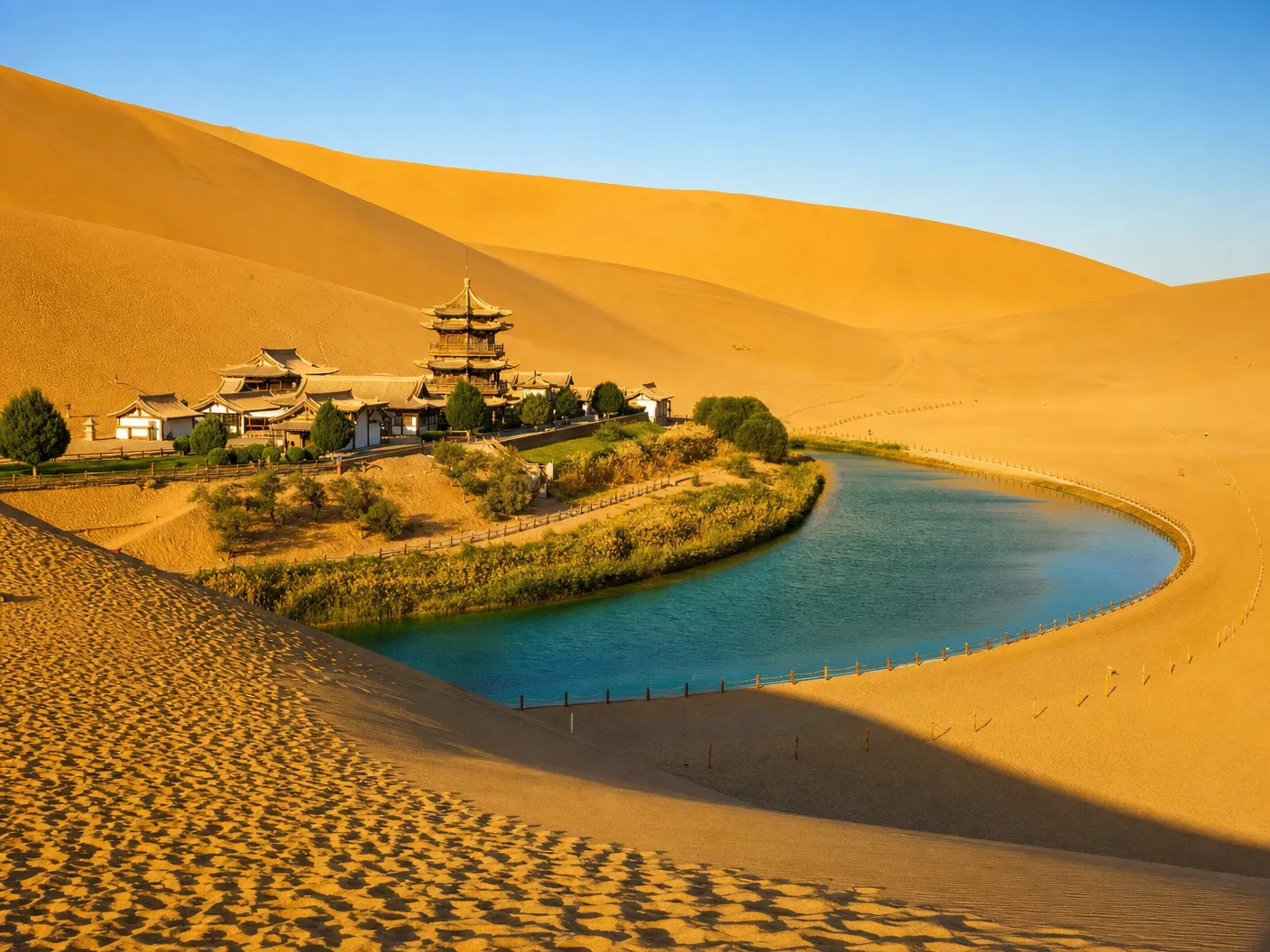
Dunhuang
敦煌
Must-Visit Attractions
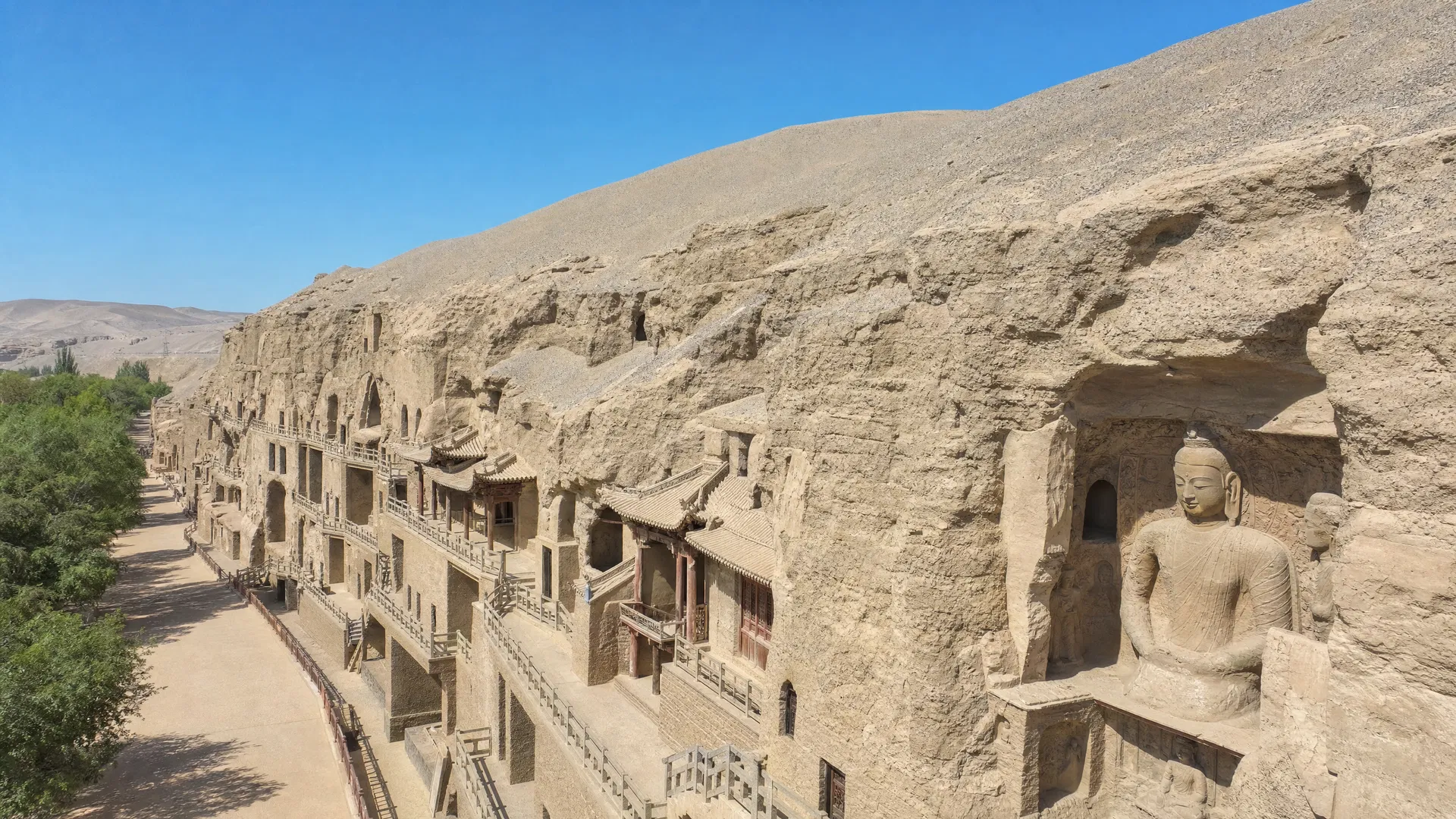
Mogao Caves
The Mogao Caves are a UNESCO World Heritage Site featuring 252 Buddhist cave temples carved into a sandstone cliff. These ancient caves contain thousands of Buddha statues and intricate murals representing various periods of Buddhist art. The site is one of China's most important archaeological treasures and showcases the evolution of Buddhist sculpture along the Silk Road.
Highlights:
- Buddhist caves
- Ancient murals
- Buddha statues
- Silk Road heritage
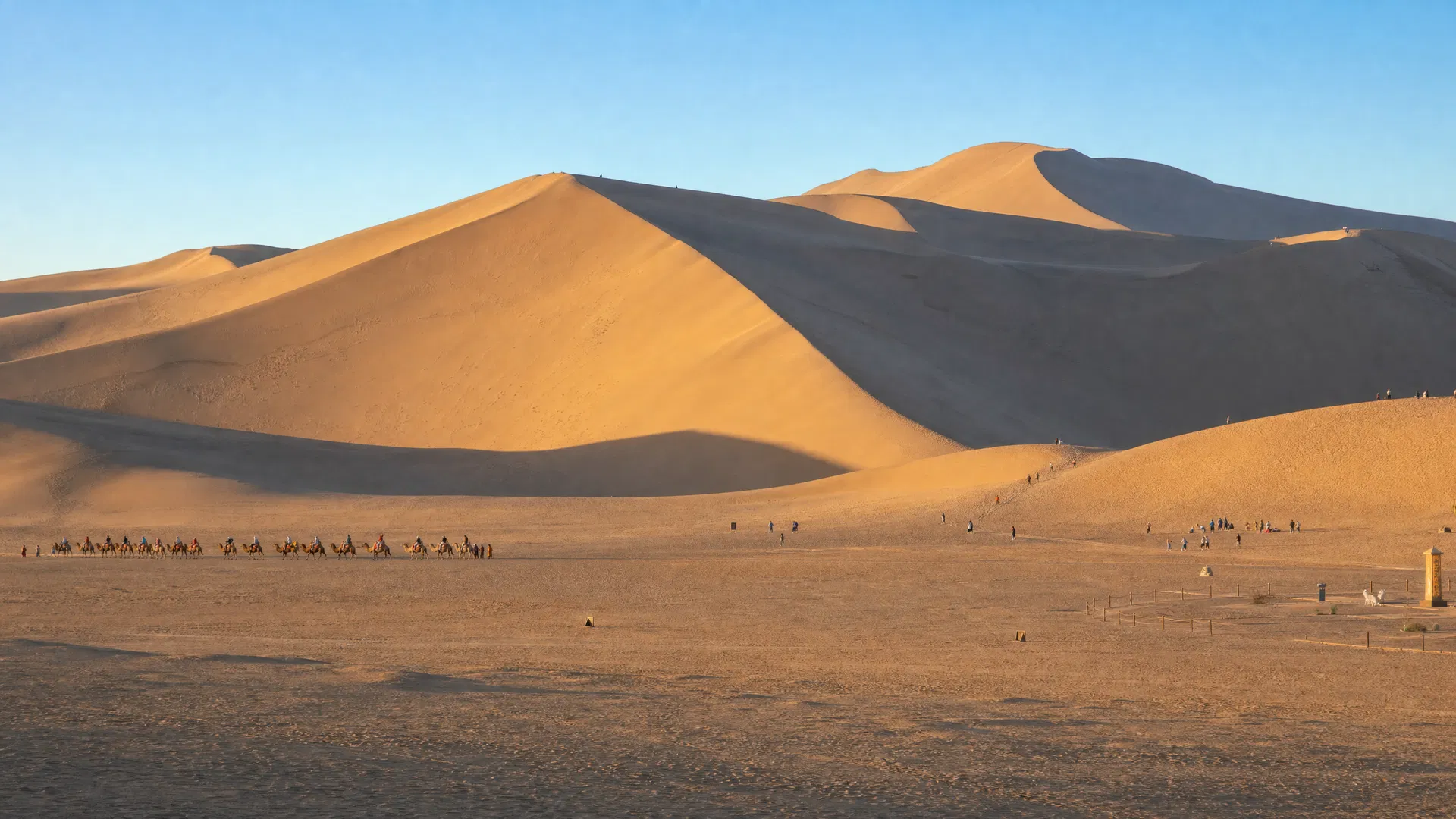
Singing Sand Dunes
The Singing Sand Dunes are massive golden sand formations that produce a musical sound when the sand shifts in the wind. These towering dunes create a spectacular desert landscape with smooth, undulating surfaces that change color throughout the day. Visitors can enjoy camel trekking, sandboarding, and experiencing the raw beauty of the Gobi Desert.
Highlights:
- Golden sand dunes
- Musical sounds
- Camel trekking
- Desert landscape
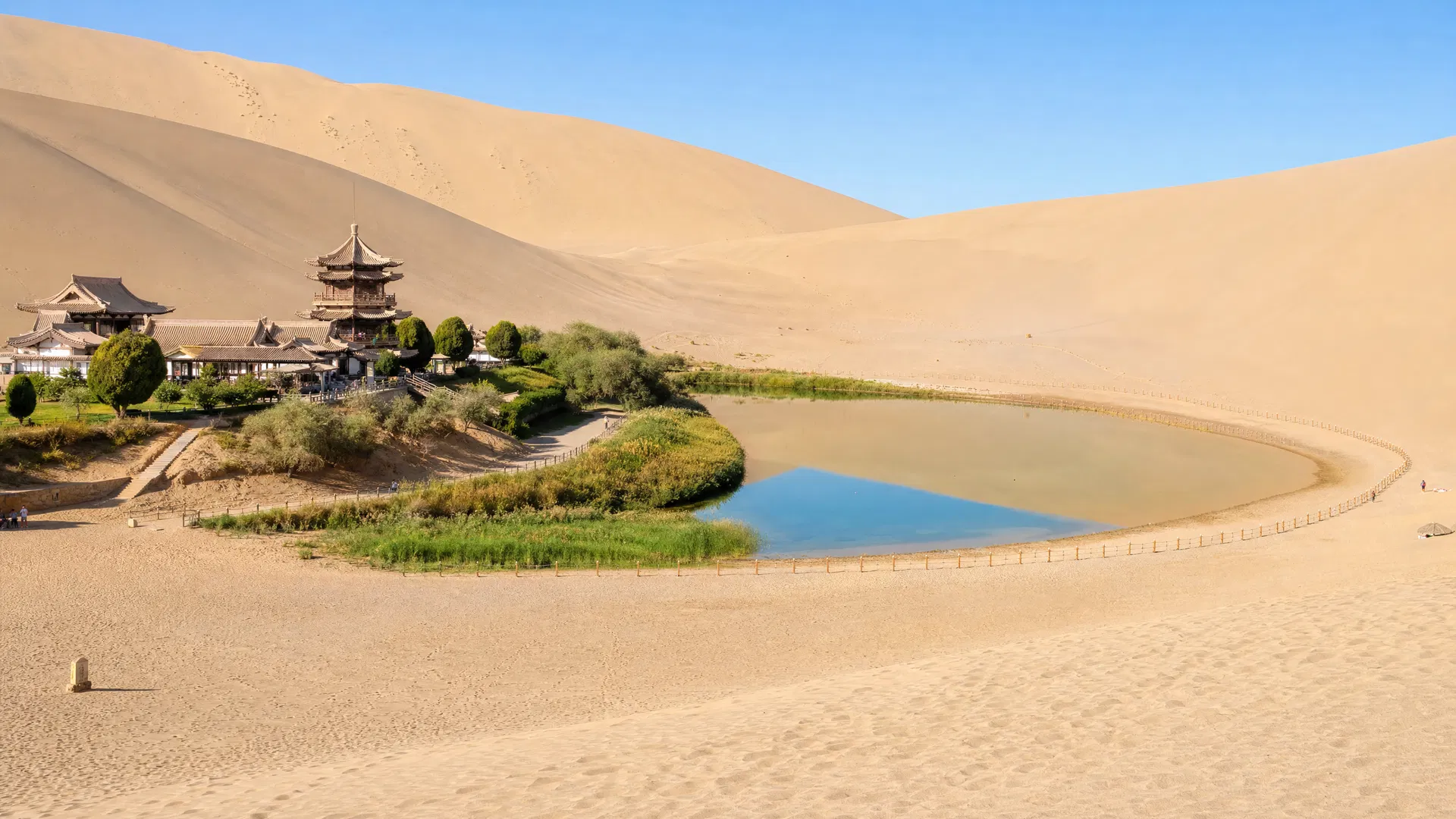
Crescent Moon Lake
Crescent Moon Lake is a pristine oasis lake surrounded by towering sand dunes, creating a surreal contrast between water and desert. The crescent-shaped lake is fed by natural springs and is surrounded by lush vegetation. The site is a remarkable example of nature's resilience in the harsh desert environment and offers stunning photography opportunities.
Highlights:
- Crescent-shaped lake
- Desert oasis
- Sand dunes
- Natural springs
B2B Travel Information: Dunhuang
Overview for Travel Agencies
Dunhuang is one of the most historically significant cities on the ancient Silk Road, home to the Mogao Caves — a UNESCO World Heritage Site containing the world's largest collection of Buddhist art spanning 1,000 years — and the extraordinary Crescent Lake oasis surrounded by the singing Mingsha Sand Dunes. Travel agencies consistently rate Dunhuang as one of China's most unique and memorable destinations for international groups.
Group Size & Duration
Ideal for groups of 8–30 pax. Recommended tour duration: 2–3 days in Dunhuang, typically combined with Jiayuguan (2 hrs) and Zhangye Danxia (3 hrs) for a Silk Road circuit.
Logistics & Connectivity
Served by Dunhuang Airport (DNH). Connections from Lanzhou (1 hr), Xi'an (1.5 hrs), and Urumqi (1.5 hrs). Desert climate with extreme temperature variations; FancyChinatour provides climate preparation guidance.
Signature Experience
A sunset camel ride to the Crescent Lake — a perfect crescent of water nestled in a bowl of golden sand dunes — followed by a private evening tour of the Mogao Caves with expert art historian commentary on the 1,600-year-old Buddhist murals.
FancyChinatour B2B Service Highlight
FancyChinatour arranges Mogao Caves expert art historian tours, Crescent Lake sunset camel experiences, and comprehensive Silk Road circuit packages for international travel agency groups visiting Dunhuang.
Dunhuang Silk Road heritage and desert-comfort group planning
Dunhuang is best briefed as a Silk Road heritage stop where Mogao Caves interpretation and oasis-desert outdoor time are separate programme decisions. Agencies should define cultural depth, usable nights, indoor and outdoor balance, temperature comfort, walking profile and photography priorities before quotation. Heritage access, visit timing, activity conditions, transport, supplier availability and final inclusions are confirmed only in the written proposal.
- Separate heritage interpretation and desert-outdoor time into distinct group blocks rather than treating one as a substitute for the other.
- Set cultural depth, walking and sun-exposure comfort, temperature tolerance and photography priorities before placing outdoor activity time.
- Clarify whether Dunhuang is a focused heritage stay or a comparison point beside Xi'an, Ningxia or Urumqi; confirm all operating conditions in the written proposal.
Dunhuang and Qinghai plateau ecology planning comparison
Dunhuang’s Silk Road heritage and oasis-desert programme has a different product role from Qinghai’s Xining-gateway plateau ecology and Tibetan cultural context. Agencies can compare cultural interpretation, outdoor rhythm, usable nights and environmental setting before deciding whether either section belongs in a wider Northwest brief; access, transport, supplier availability and final inclusions are confirmed in the written proposal.
Qinghai plateau ecology and Xining gateway group planningCompares Silk Road heritage and desert comfort with a separately paced Qinghai lake, wetland and Tibetan cultural programme.Compare Silk Road heritage, desert and Northwest cultural programme roles
These pages let agencies compare Dunhuang’s Mogao Caves and oasis-desert programme with Xi’an’s ancient-capital heritage, Ningxia’s Yellow River and Western Xia context, and Urumqi’s Xinjiang gateway role. They support product design rather than a guaranteed routing sequence; travel window, access, transport, accommodation and final inclusions are confirmed in the written proposal.
Frequently Asked Questions about Dunhuang
What is the best time to visit Dunhuang?
April to October is the best time to visit Dunhuang, with warm temperatures ideal for exploring the Mogao Caves and the Singing Sand Dunes. Summer (June–August) is hot but manageable with early morning visits to the dunes. Spring (April–May) and autumn (September–October) offer the most comfortable conditions. Winter (November–February) is cold but offers a unique experience of the Silk Road oasis without the summer crowds.
What makes the Mogao Caves a UNESCO World Heritage Site?
The Mogao Caves (Mogao Grottoes) are one of the world's greatest repositories of Buddhist art, comprising 492 decorated caves containing over 45,000 square metres of murals and more than 2,000 painted sculptures, created over a period of 1,000 years (4th–14th centuries CE). The caves were sealed in the 11th century and rediscovered in 1900, preserving an extraordinary record of Buddhist iconography, Silk Road culture, and artistic evolution. UNESCO inscribed the site in 1987.
What is the Singing Sand Dunes (Mingsha Shan) experience in Dunhuang?
The Singing Sand Dunes (Mingsha Shan) and Crescent Moon Spring (Yueyaquan) are Dunhuang's most iconic natural attraction. The dunes rise to 250 metres and produce a distinctive humming sound when wind blows across the sand. Activities include camel riding at sunset, sandboarding, and 4WD desert excursions. The Crescent Moon Spring, a small oasis that has survived for over 2,000 years despite being surrounded by sand dunes, is a remarkable natural phenomenon. FancyChinatour arranges sunset camel rides and overnight desert camping experiences.
Request a Quote
Get a personalized quote for your group travel to Dunhuang
Travel-agency enquiries
Established
Published destination profiles