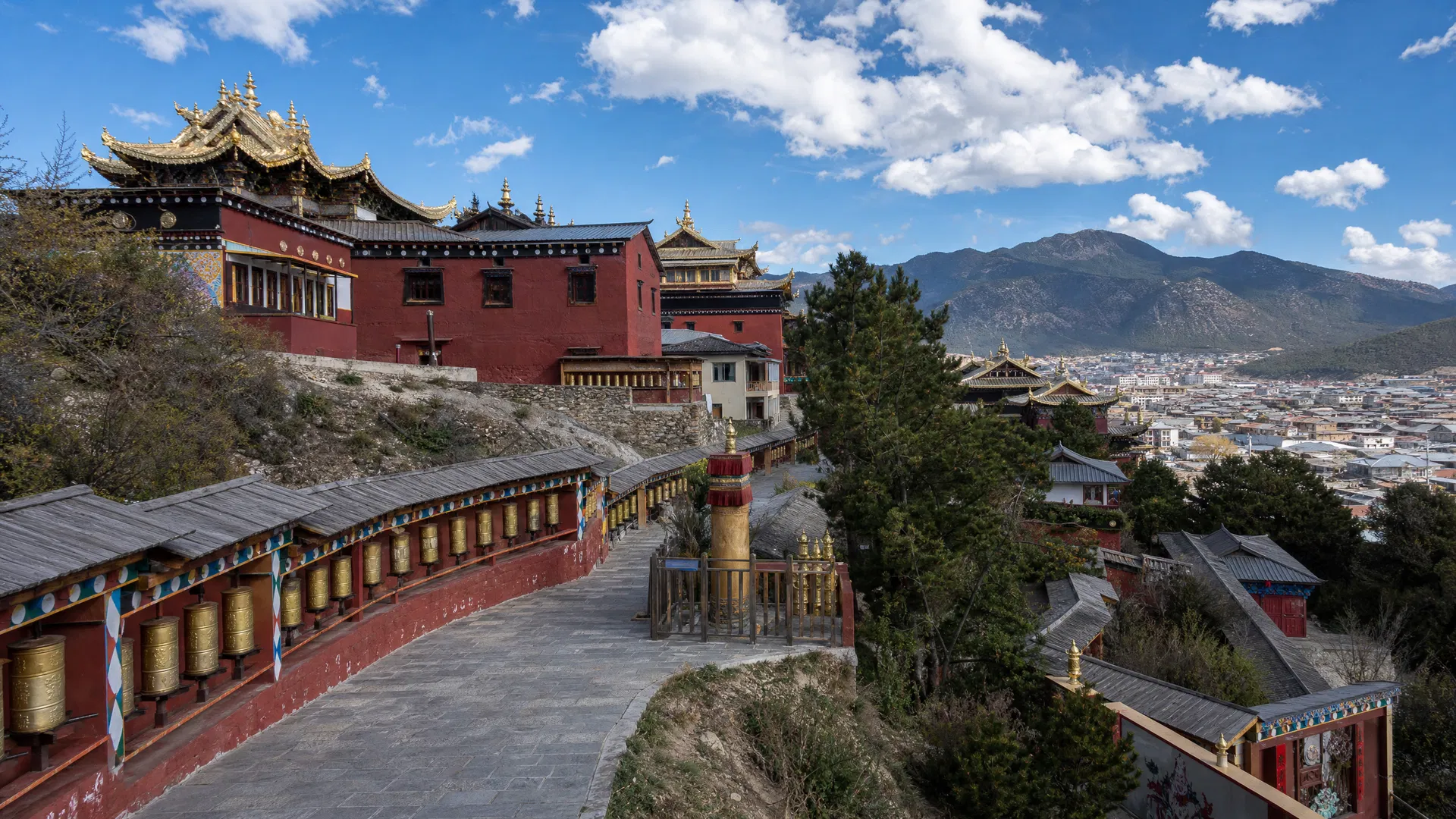
Shangri-La
香格里拉
Must-Visit Attractions
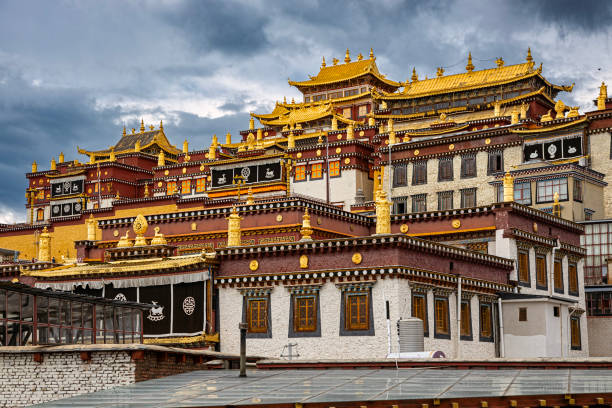
Songzanlin Monastery
Often called the 'Little Potala Palace', Songzanlin Monastery is the largest Tibetan Buddhist monastery in Yunnan Province, housing over 700 monks. Founded in 1679 by the Fifth Dalai Lama, its golden rooftops and whitewashed walls rise dramatically above Shangri-La's plateau. The monastery complex contains rare thangka paintings, sacred scriptures, and gilded statues, offering tour groups an unparalleled window into Tibetan Buddhist culture and Khampa heritage.
Highlights:
- Tibetan Buddhist monastery
- Golden rooftop halls
- Rare thangka paintings
- 700+ resident monks

Potatso National Park
Potatso National Park — China's first national park established under international standards — protects a pristine alpine ecosystem at 3,500 metres elevation. Its jewel is Shudu Lake, a glacial lake fringed by ancient spruce forests and wildflower meadows that burst into colour each spring. The park is home to over 20% of China's mammal species and 30% of its bird species, making it a world-class destination for eco-tourism and wildlife observation.
Highlights:
- Shudu Lake
- Alpine ecosystem
- Wildlife sanctuary
- China's first national park

Dukezong Ancient Town
Dukezong Ancient Town (獨克宗古城) is one of the best-preserved Tibetan towns in Yunnan and the spiritual and commercial heart of Shangri-La. Its name means 'Moon City Built in Stone' in Tibetan, reflecting its ancient origins as a Tang Dynasty trading post on the Tea Horse Road. The old town's cobblestone lanes wind past whitewashed Tibetan courtyard homes, centuries-old monasteries, and the world's largest hand-turned prayer wheel at its summit. Dukezong was partially damaged by fire in 2014 but has been sensitively restored, and its vibrant night market, traditional thangka workshops, and Khampa cultural performances make it an essential evening destination for all tour groups visiting Shangri-La.
Highlights:
- Tang Dynasty Tea Horse Road post
- World's largest hand-turned prayer wheel
- Traditional Khampa architecture
- Vibrant night market
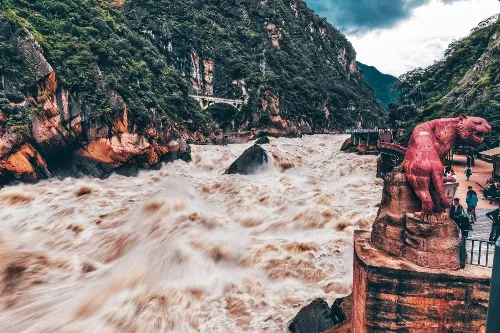
Tiger Leaping Gorge
Tiger Leaping Gorge (虎跳峽) is one of the world's deepest river canyons, carved by the Jinsha River (upper Yangtze) as it forces through a narrow passage between Jade Dragon Snow Mountain and Haba Snow Mountain. At its narrowest point the gorge is only 30 metres wide, while the canyon walls soar over 3,000 metres above the river — a vertical relief that ranks among the most dramatic on earth. The classic two-day high trail offers international trekkers an unparalleled combination of mountain scenery, Naxi and Tibetan village hospitality, and the raw power of one of Asia's great rivers. It is widely regarded as one of the finest day-hikes in China.
Highlights:
- World's deepest river canyon
- 3,000m vertical canyon walls
- Classic two-day high trail
- Jade Dragon & Haba Snow Mountains
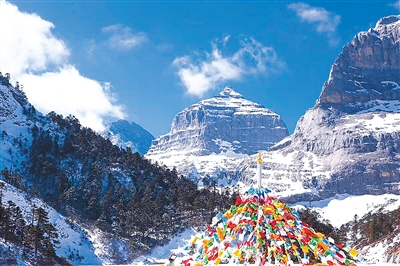
Balagezong Grand Canyon
Balagezong Grand Canyon (巴拉格宗) is one of Yunnan's most spectacular and least-visited natural wonders, a hidden valley of towering granite peaks, ancient Tibetan villages, and pristine alpine forests located 65 kilometres north of Shangri-La. The scenic area encompasses a dramatic canyon carved by the Balagezong River, rising from subtropical valley floors to snow-capped summits above 5,000 metres, creating an extraordinary range of ecosystems within a single destination. The resident Tibetan village of Balagezong, perched on a cliff at 2,400 metres, has been inhabited for over 1,000 years and offers tour groups an authentic encounter with traditional Khampa Tibetan culture, architecture, and cuisine far removed from the tourist circuit.
Highlights:
- Hidden granite canyon
- 1,000-year-old cliff village
- 5,000m snow-capped peaks
- Pristine alpine ecosystems
Meili Snow Mountain
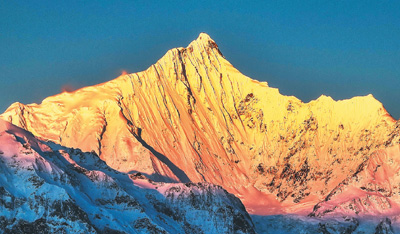
Meili Snow Mountain (梅里雪山), also known as Kawagebo, is the most sacred mountain in Tibetan Buddhism and the highest peak in Yunnan at 6,740 metres. The mountain has never been successfully summited — a 1991 Japanese-Chinese expedition that attempted the peak was lost in an avalanche, and out of respect for its sacred status, climbing has been permanently banned. For international visitors, the reward is not the summit but the sunrise spectacle: when the first rays of light strike the golden pyramid of Kawagebo and its satellite peaks above a sea of clouds, the effect is considered one of the most beautiful natural phenomena in China. The nearby Mingyong Glacier, the lowest-latitude glacier in the Northern Hemisphere, offers accessible trekking and a vivid lesson in climate change.
Highlights:
- Yunnan's highest peak at 6,740m
- Most sacred Tibetan Buddhist mountain
- Legendary sunrise spectacle
- Mingyong Glacier trekking
B2B Travel Information: Shangri-La
Overview for Travel Agencies
Shangri-La (Zhongdian) in northwest Yunnan is the legendary Himalayan paradise made famous by James Hilton's novel, offering travel agencies a destination of extraordinary spiritual and natural beauty. The magnificent Songzanlin Monastery — the largest Tibetan Buddhist monastery in Yunnan — combined with the pristine alpine meadows and snow-capped peaks of the Hengduan Mountains creates an experience of profound beauty and cultural depth.
Group Size & Duration
Ideal for groups of 8–25 pax. Recommended tour duration: 3–4 days in Shangri-La, typically combined with Lijiang (3 hrs south) and Dali (5 hrs south) for a classic northwest Yunnan circuit.
Logistics & Connectivity
Served by Shangri-La Diqing Airport (DIG). Connections from Kunming (1 hr) and Lijiang (30 min). Altitude is 3,200m; FancyChinatour provides altitude acclimatisation guidance. Best visited May–October.
Signature Experience
The Songzanlin Monastery at golden hour — when the setting sun illuminates the golden rooftops of the 'Little Potala Palace' and pilgrims circumambulate the complex with prayer wheels spinning — followed by a sunset over the Napa Hai wetlands with grazing yaks.
FancyChinatour B2B Service Highlight
FancyChinatour arranges Songzanlin Monastery expert Tibetan Buddhist guides, Napa Hai wetland experiences, and comprehensive northwest Yunnan circuits combining Shangri-La, Lijiang, and Dali for international travel agencies.
Shangri-La highland cultural programme brief
Shangri-La should be positioned as the highland cultural section of a northwest Yunnan programme, not simply as another scenic stop. Songzanlin Monastery, Dukezong Ancient Town and Napa Hai offer different programme roles; the group brief should also address altitude, walking rhythm, season and contingency planning before access, transport and final inclusions are confirmed.
- Sequence monastery, old-town and wetland visits around the group's acclimatisation and walking pace.
- Flag altitude, weather, mobility and meal requirements early for the written planning brief.
- Confirm current access, transport, guide allocation and contingency arrangements before quotation.
Shangri-La and Lhasa Tibetan Buddhist culture programme planning
Shangri-La's northwest Yunnan highland culture and Lhasa's permit-aware Tibet cultural programme can be compared as distinct products, not as a fixed transfer route. Use this link to decide the intended cultural depth, altitude rhythm, usable nights and group needs before building a proposal; documents, access, transport and final inclusions are confirmed in the written proposal.
Lhasa permit-aware Tibetan culture and altitude-sensitive group planningDefines Lhasa as a separate Tibet cultural component with its own document context and high-altitude group pace.Shangri-La highland and Dali lower-altitude cultural programme comparison
Shangri-La's Tibetan Buddhist and highland programme can be compared with Dali's Bai heritage, old-town and Erhai landscape rhythm when an agency is setting a varied Yunnan circuit. This is not a fixed transfer promise; altitude, seasonal access, transport, accommodation and final inclusions are confirmed in the written proposal.
Dali route design for Yunnan group programmesAdds a lower-altitude cultural-and-lake programme after the agency has defined the highland role and group comfort needs.Northwest Yunnan highland route connections
The following pages help an agency compare Shangri-La's highland and Tibetan Buddhist focus with the lower-altitude cultural rhythm of Dali, the ancient-town and mountain sequence of Lijiang, and Kunming's role as a broader Yunnan gateway. They are route-planning references; transport, seasonal access and service availability require written confirmation.
Frequently Asked Questions about Shangri-La
What is the best time to visit Shangri-La?
May to October is the best time to visit Shangri-La (Zhongdian), when the alpine meadows are in bloom and the weather is mild. The Tibetan New Year (Losar) in February–March is a vibrant cultural event. Summer (June–August) brings lush grasslands and wildflowers at Pudacuo National Park. Winter (November–February) is cold (temperatures can drop to -15°C) but offers pristine snow scenery and fewer crowds.
What Tibetan cultural experiences are available in Shangri-La?
Shangri-La offers immersive Tibetan cultural experiences including a visit to the magnificent Ganden Sumtseling Monastery (the largest Tibetan Buddhist monastery in Yunnan), attending a traditional Tibetan butter tea ceremony, exploring the ancient Dukezong Old Town with its 1,300-year history, visiting nomadic Tibetan families on the Napa Hai grasslands, and participating in the Tibetan Thangka painting workshop. FancyChinatour arranges respectful, authentic cultural immersion programmes.
How high is Shangri-La and should I be concerned about altitude?
Shangri-La sits at approximately 3,280 metres above sea level, and mild altitude effects are common for visitors arriving from lower elevations. Most travellers adapt within 1–2 days. FancyChinatour recommends arriving from Lijiang (2,400m) rather than directly from Kunming (1,900m) to allow gradual acclimatisation. We provide pre-trip altitude guidance, arrange oxygen supplies at hotels, and design itineraries with appropriate rest periods for all group members.
Request a Quote
Get a personalized quote for your group travel to Shangri-La
Travel-agency enquiries
Established
Published destination profiles